As we all know, TOGAF Enterprise Architecture Part 2 Exam certification increasingly becomes a validation of an individual's skills. Now, the market has a great demand for the people qualified with TOGAF Enterprise Architecture Part 2 Exam certification. In recent years, the The Open Group Enterprise Architecture certification has become a global standard for many successfully IT companies. So, in order to get a better job chance, many people choose to attend the TOGAF Enterprise Architecture Part 2 Exam exam test and get the certification. Now, there are many people preparing for the OGEA-102 test, and most of them meet with difficulties. How to prepare it with high efficiency is quite important. While, your problem will be solved by the TOGAF Enterprise Architecture Part 2 Exam test practice material which can ensure you 100% pass.

We offer free update service for one year
Every time, before our customer buying our TOGAF Enterprise Architecture Part 2 Exam pass4sure practice, they always ask whether it is the latest or not, and care about the latest update time. It is very normal. We can understand this case. First, we guarantee the TOGAF Enterprise Architecture Part 2 Exam test dumps you get are the latest and valid which can ensure you pass with ease. Second, we offer free update service for one year after you purchase Enterprise Architecture sure pass pdf, so you do not worry the dump is updated after you buy. If there is any update about OGEA-102 TOGAF Enterprise Architecture Part 2 Exam test practice material, our system will send it to your payment email automatically. Besides, if you care about the update information, you can pay attention to the version No. on our product page. If the version No. is increased, the TOGAF Enterprise Architecture Part 2 Exam pdf dump is updated. If you do not receive any email when you find our dumps are updated, please contact us by email, we will solve your problem as soon as possible.
Besides, we have the full refund policy, if you do not pass the The Open Group TOGAF Enterprise Architecture Part 2 Exam actual test, we promise to give you full refund. You just need to show us your failure TOGAF Enterprise Architecture Part 2 Exam certification. After confirmation, we will refund you. The refund money will enter into your accounts in about 15 days, so please wait with patience.
Instant Download OGEA-102 Braindumps: Our system will send you the TestPDF OGEA-102 braindumps file you purchase in mailbox in a minute after payment. (If not received within 12 hours, please contact us. Note: don't forget to check your spam.)
Printable Exams-in PDF format
The pdf format is the common version of our TOGAF Enterprise Architecture Part 2 Exam pdf training material.The content is the same as other two versions. Besides, the cost of OGEA-102 pdf test torrent is very reasonable and affordable. TOGAF Enterprise Architecture Part 2 Exam sure pass pdf can be printed into paper, which is very convenient for you to review and do marks. If you are tired of the digital screen study and want to study with your pens, TOGAF Enterprise Architecture Part 2 Exam pdf version is suitable for you. The Enterprise Architecture OGEA-102 pdf paper study material is very convenient to carry. You can make full use of your spare time to prepare the TOGAF Enterprise Architecture Part 2 Exam actual test. When you are at the cafe, you can read and scan your papers and study two questions. I think this way to study is acceptable by many people. In addition, when you want to do some marks during your TOGAF Enterprise Architecture Part 2 Exam test study, you just need a pen, you can write down what you thought. With the obvious marks, you will soon get your information in the next review. Then repeated memory about OGEA-102 pass4sure study guide will bring a good score in the TOGAF Enterprise Architecture Part 2 Exam actual test.
The Open Group TOGAF Enterprise Architecture Part 2 Sample Questions:
1. You are working as an Enterprise Architect within an Enterprise Architecture (EA) team at a multinational energy company. The company is committed to becoming a net-zero emissions energy business by 2050. To achieve this, the company is focusing on shifting to renewable energy production and adopting eco-friendly practices.
The EA team, which reports to the Chief Technical Officer (CTO), has been tasked with overseeing the transformation to make the company more effective through acquisitions. The company plans to fully integrate these acquisitions, including merging operations and systems.
To address the integration challenges, the EA team leader wants to know how to manage risks and ensure that the company succeeds with the proposed changes. Based on the TOGAF Standard, which of the following is the best answer?
A) The EA team should evaluate the company's readiness for change by identifying factors that will impact the transformation. These factors will be used to determine initial risks associated with the initiative.
B) The EA team should document the risks associated with the transformation in an Implementation Factor Catalog to inform decisions during implementation and deployment.
C) The EA team should develop Business Architecture views that demonstrate how stakeholder concerns are addressed and assess each factor for readiness, urgency, and degree of difficulty.
D) The EA team should create a Business Scenario to fully describe the business problem that is being addressed by the transformation. Once requirements are identified, they should be evaluated in terms of risks. Any residual risks should be escalated to the Architecture Board.
2. You are working as an Enterprise Architect at a large company. The company runs many retail stores as well as an online marketplace that allows hundreds of brands to partner with the company. The company has a mature Enterprise Architecture (EA) practice and uses the TOGAF standard for its architecture development method. The EA practice is involved in all aspects of the business, with oversight provided by an Architecture Board with representatives from different parts of the business. The EA program is sponsored by the Chief Information Officer (CIO).
Many of the stores remain open all day and night. Each store uses a standard method to track sales and inventory, which involves sending accurate, timely sales data to a central AI-based inventory management system that can predict demand, adjust stock levels, and automate reordering. The central inventory management system is housed at the company's central data center.
The company has acquired a major rival. The Chief Executive Officer (CEO) believes that the merger will enable growth through combined offerings and cost savings. The decision has been made to fully integrate the two organizations, including merging retail operations and systems. Duplicated systems will be replaced with one standard retail management system. The CIO expects significant savings from these changes across the newly merged company.
The rival company has successfully implemented the use of hand-held devices within stores for both customers and staff, which has increased satisfaction due to time savings. The CIO has approved the rollout of these devices to all stores but has stated that training should be brief, as there are many part-time employees.
You have been asked to confirm the most relevant architecture principles for this transformation. Based on the TOGAF Standard, which of the following is the best answer?
A) Common Use Applications, Data is an Asset, Data is Accessible, Ease of Use, Business Continuity
B) Maximize Benefit to the Enterprise, Common Use Applications, Data is an Asset, Responsive Change Management, Technology Independence
C) Common Vocabulary and Data Definitions, Compliance with the Law, Requirements Based Change, Responsive Change Management, Data Security
D) Control Technical Diversity, Interoperability, Data is an Asset, Data is Shared, Business Continuity
3. Scenario
You are working as an Enterprise Architect within an Enterprise Architecture (EA) team at a large government agency. The agency has multiple divisions.
The agency has a well-established EA practice and follows the TOGAF standard as its method for architecture development. Along with the EA program, the agency also uses various management frameworks, including business planning, project/portfolio management, and operations management. The EA program is sponsored by the Chief Information Officer (CIO), who has actively promoted architecting with agility within the EA department as her preferred approach for projects.
The government has mandated that the agency prepare themselves for an Artificial Intelligence (AI)-first world, which they have called their "AI-first" plan. As a result, the agency is looking to determine the impact and role that AI will play moving forward. The CIO has approved a Request for Architecture Work to look at how AI can be used for services across the agency. She has noted that digital platforms will be a priority for investment in order to scale the AI applications planned. Using AI to automate tasks and make things run smoother is seen as a big advantage. Process automation and improved efficiency from manual, repetitive activities have been identified as the key benefits of applying generative AI to their agency's business. This will include back-office automation, for example, for help center agents who receive hundreds of email inquiries. This should also improve services for citizens by making them more efficient and personalized, tailored to each individual's needs.
Many of the agency leaders are worried about relying too much on AI. Some leaders think their employees will need to learn new skills. Some employees are worried they might lose their jobs to AI. Other leaders worry about security and cyber resilience in the digital platforms needed for AI to be successful.
The leader of the Enterprise Architecture team has asked for your suggestions on how to address the concerns, and how to manage the risks of a new architecture for the AI-first project.
Based on the TOGAF standard, which of the following is the best answer?
A) You recommend that the key stakeholders be formally identified. This should include those who will be most helpful for the change to be successful. A Communication Plan should be made to address their needs. This plan should include a report that summarizes the key features of the architecture based on stakeholder requirements and addressing concerns. You communicate with each key stakeholder to make sure their concerns are being addressed. You make sure that the architecture being developed clearly addresses risk management.
B) You recommend conducting an analysis that separates the different types of stakeholders into groups.They can be divided into categories: corporate functions, end-user organization, project team, external vendors, and external partners. A model will be developed for each stakeholder category to ensure that all the necessary information and actions are taken into account. Meetings will be arranged with stakeholders to verify that their concerns have been adequately addressed. Risk management will be included in this process.
C) You recommend creating an Organization Map to display the links between different parts of the agency. This will help the EA team to find and involve all areas of the agency impacted by this strategic change. Multiple business models should then be created that can be applied to AI-related projects. A meeting will be held with the stakeholders to teach them how to interpret the models and see how their concerns are being addressed. Risk will be managed as part of the Security Architecture development.
D) You recommend conducting an analysis of the stakeholders. This involves documenting the positions, concerns, issues, and cultural factors of each group. This information will shape how the architecture is to be presented and communicated. The concerns and relevant views can then be defined for each group and recorded in the Architecture Vision document. The requirements for addressing risk should be recorded in the Architecture Requirements Specification and checked through regular assessments and feedback.
4. Scenario
You are working as an Enterprise Architect within a large manufacturing company. The company has multiple divisions located worldwide.
After a recent study, senior management is concerned about the impact of the company's multiple data centers and duplication of applications on business efficiency. To address this concern, a strategic architecture has been defined; it will help improve the ability to meet customer demand and improve the efficiency of operations. The strategic architecture involves the consolidation of multiple application programs that are currently used in different divisions and putting them all onto a cloud-based solution instead.
Each division has completed the Architecture Definition documentation to meet its own specific operational requirements. The enterprise architects have analyzed the corporate changes and implementation constraints.
A consolidated gap analysis has been completed. Based on its results, the architects have reviewed the requirements, dependencies, and interoperability requirements needed to integrate the cloud-based solution.
The architects have completed the Business Transformation Readiness Assessment. Based on all these factors, they have produced a risk assessment. They have also completed the draft Implementation and Migration Plan, the draft Architecture Roadmap, and the Capability Assessment deliverables.
Due to the risks of changing from the current environment, the decision has been taken that a gradual approach is needed to implement the target architecture. It will likely take a few years to complete the whole implementation process.
The company has a mature Enterprise Architecture (EA) practice and uses the TOGAF standard for its architecture development method. The EA practice is engaged throughout all the divisions, with implementation governance assigned to a business line. In addition to providing guidance on using architecture frameworks, including business planning, project/portfolio management, and operations management, the EA program is sponsored by the Chief Information Officer (CIO).
You have been asked to decide on the next steps for the migration planning.
Based on the TOGAF standard, which of the following is the best answer?
A) You assess the business value for each project by applying the Business Value Assessment Technique.The assessment should focus on return on investment and performance evaluation criteria to prioritize the most progress of the architecture transformation. You confirm and plan a series of Transition Architecture phases using an Architecture Definition Increments Table. You document the lessons learned and generate the final Implementation and Migration Plan.
B) You update the Architecture Definition Document, which includes setting project objectives and documenting the final requirements. This will ensure that the architecture remains relevant and responsive to the needs of the enterprise. You then produce an Implementation Governance Model to manage the lessons learned prior to finalizing the Implementation and Migration Plan. You recommend that lessons learned be applied as changes to the architecture without review.
C) You examine how the Implementation and Migration Plan affects the other frameworks being used in the organization. You coordinate the planning with the business planning, project/portfolio management, and operations management frameworks. You assign a business value to each project, considering the available resources and how well they align with the strategy. You then update the architecture roadmap and the Implementation and Migration Plan.
D) You conduct a series of Compliance Assessments to ensure that the architecture is being implemented according to the contract. The Compliance Assessment verifies that the implementation team is using the proper development methodology. It should include deployment of monitoring tools and ensure that performance targets are being met. If they are not met, then you would identify changes to performance requirements and update those in the Implementation and Migration Plan.
5. Please read this scenario prior to answering the question
You have been appointed as senior architect working for an autonomous driving technology development company. The mission of the company is to build an industry leading unified technology and software platform to support connected cars and autonomous driving.
The company uses the TOGAF Standard as the basis for its Enterprise Architecture (EA) framework.
Architecture development within the company follows the purpose-based EA Capability model as described in the TOGAF Series Guide: A Practitioners ' Approach to Developing Enterprise Architecture Following the TOGAF ADM.
An architecture to support strategy has been completed defining a long-range Target Architecture with a roadmap spanning five years. This has identified the need for a portfolio of projects over the next two years.
The portfolio includes development of travel assistance systems using swarm data from vehicles on the road.
The current phase of architecture development is focused on the Business Architecture which needs to support the core travel assistance services that the company plans to provide. The core services will manage and process the swarm data generated by vehicles, paving the way for autonomous driving in the future.
The presentation and access to different variations of data that the company plans to offer through its platform poses an architecture challenge. The application portfolio needs to interact securely with various third-party cloud services, and V2X (Vehicle-to-Everything) service providers in many countries to be able to manage the data at scale. The security of V2X is a key concern for the stakeholders. Regulators have stated that the user ' s privacy be always protected, for example, so that the drivers ' journey cannot be tracked or reconstructed by compiling data sent or received by the car.
Refer to the scenario
You have been asked to describe the risk and security considerations you would include in the current phase of the architecture development?
Based on the TOGAF standard which of the following is the best answer?
A) You will focus on the relationship with the third parties required for the travel assistance systems and define a trust framework. This will describe the relationship with each party. Digital certificates are a key part of the framework and will be used to create trust between parties. You will monitor legal and regulatory changes across all the countries to keep the trust framework in compliance.
B) You will create a security domain model so that assets with the same level can be managed under one security policy. Since data is being shared across partners, you will establish a security federation to include them. This would include contractual arrangements, and a definition of the responsibility areas for the data exchanged, as well as security implications. You would undertake a risk assessment determining risks relevant to specific data assets.
C) You will perform a qualitative risk assessment for the data assets exchanged with partners. This will deliver a set of priorities, high to medium to low, based on identified threats, the likelihood of occurrence, and the impact if it did occur. Using the priorities, you would then develop a Business Risk Model which will detail the risk strategy including classifications to determine what mitigation is enough.
D) You will focus on data quality as it is a key factor in risk management. You will identify the datasets that need to be safeguarded. For each dataset, you will assign ownership and responsibility for the quality of data needs. A security classification will be defined and applied to each dataset. The dataset owner will then be able to authorize processes that are trusted for a certain activity on the dataset under certain circumstances.
Solutions:
Question # 1
Answer: D | Question # 2
Answer: B | Question # 3
Answer: D | Question # 4
Answer: C | Question # 5
Answer: B |


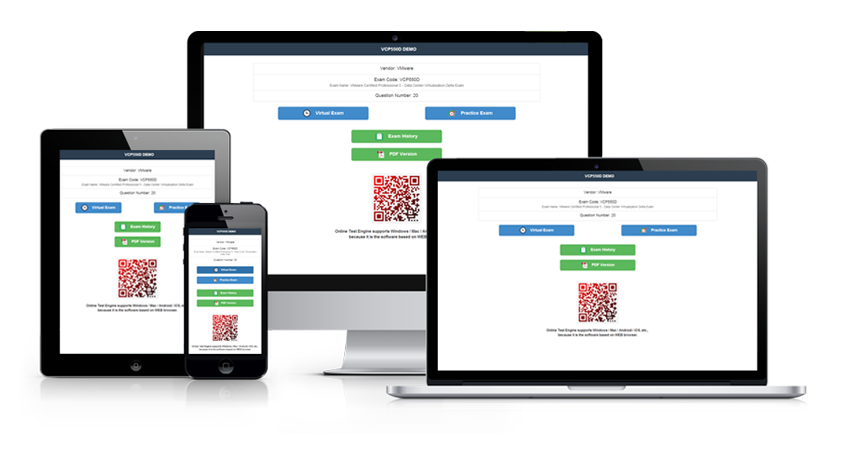
 PDF Version Demo

 Mike
Mike 
 Gary
Gary 
 Colbert
 Boris
Boris  Michell
  Kent
Kent  Bess
Bess  Claire
  Phoebe
  Polly
Polly  Ferdinand
  Miranda
  Scott
Scott  Sherry
  Bevis
Bevis