

Updated Dec-2024 Exam AZ-500 Dumps - Pass Your Certification Exam
Latest Real Microsoft AZ-500 Exam Dumps Questions
The Microsoft Azure Security Technologies certification exam covers a wide range of security topics such as identity and access management, platform protection, data and application protection, and security operations. AZ-500 exam is designed to test the candidate's ability to implement and manage security controls across various Azure services, including Azure Active Directory, Azure Security Center, Azure Key Vault, and Azure Information Protection.
Earning the Microsoft AZ-500 certification validates the candidate’s expertise in securing the Azure cloud environment and demonstrates their ability to protect data, applications, and infrastructure from security threats. Microsoft Azure Security Technologies certification is highly valued by organizations that use Azure for their cloud computing needs and can lead to career advancement and higher salaries for professionals with this credential.
Microsoft AZ-500 (Microsoft Azure Security Technologies) exam is a certification that validates the skills and knowledge of professionals in securing Microsoft Azure cloud services. AZ-500 exam is designed for individuals who have experience implementing security controls, managing identity and access, and protecting data, applications, and networks in Microsoft Azure environments. The AZ-500 exam was first introduced by Microsoft in 2019 and has since become one of the most in-demand certifications for cloud security professionals.
NEW QUESTION # 63
You have an Azure subscription that contains the resources shown in the following table.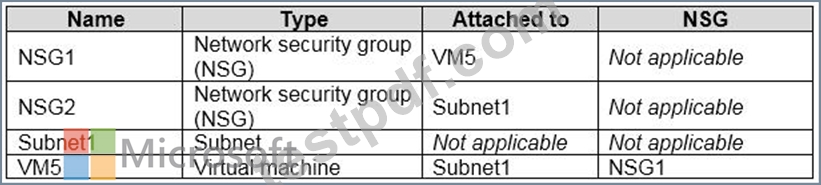
An IP address of 10.1.0.4 is assigned to VM5. VM5 does not have a public IP address.
VM5 has just in time (JIT) VM access configured as shown in the following exhibit.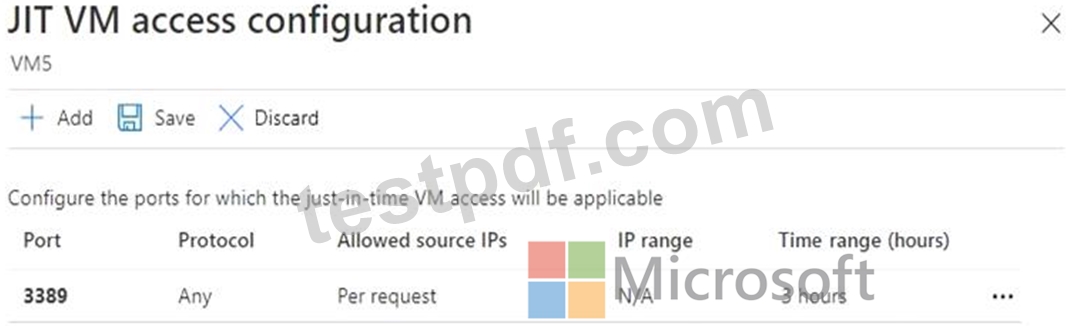
You enable JIT VM access for VM5.
NSG1 has the inbound rules shown in the following exhibit.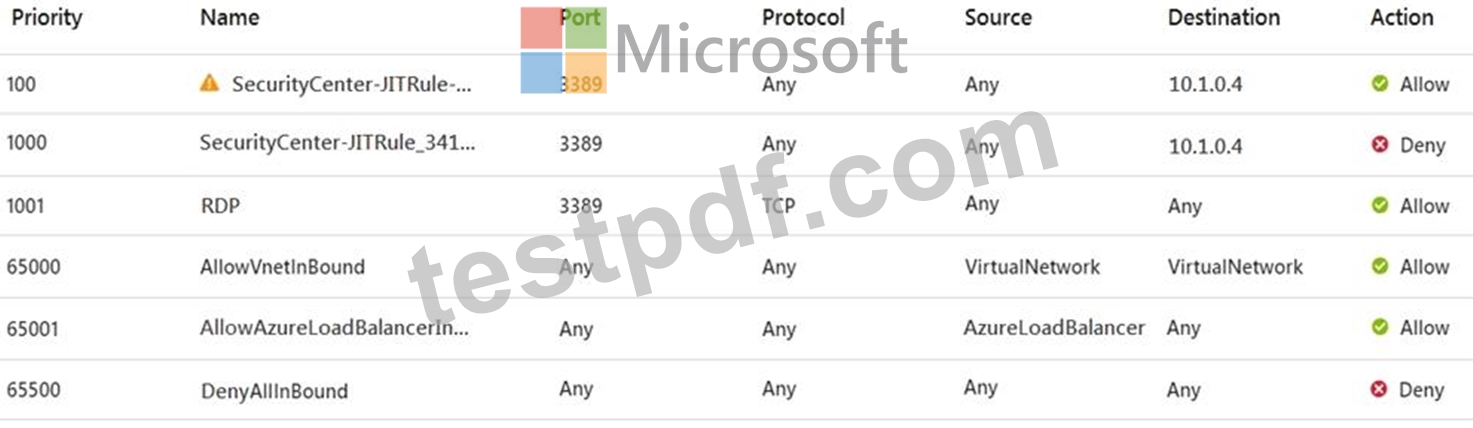
For each of the following statements, select Yes if the statement is true. Otherwise, select No.
NOTE: Each correct selection is worth one point.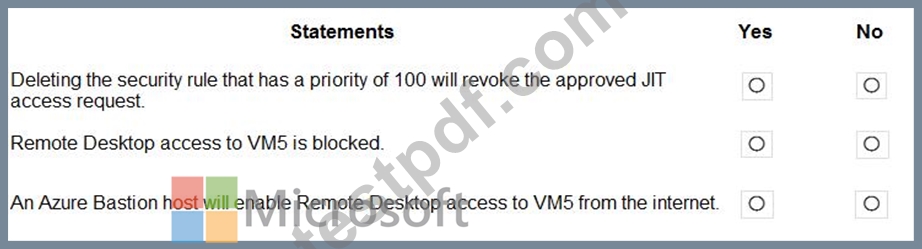
Answer:
Explanation: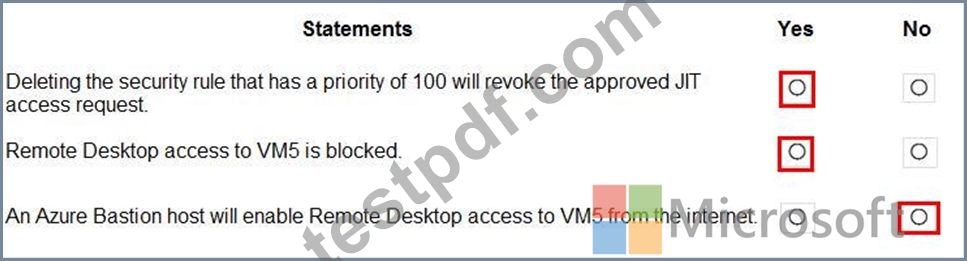
NEW QUESTION # 64
You have an Azure subscription that contains a user named User1 and a storage account named storage 1. The storage1 account contains the resources shown in the following table: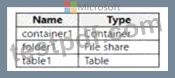
User1 is assigned the following roles for storage1:
* Storage Blob Data Reader
* Storage Table Data Contributor
* Storage File Data SMB Share Reader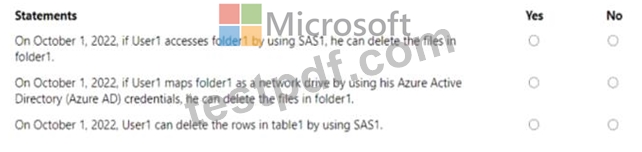
Answer:
Explanation: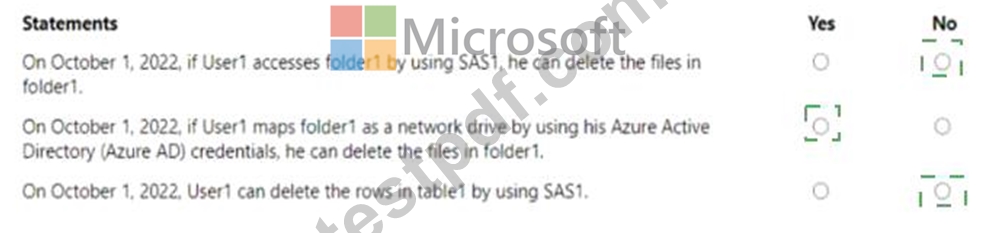
Explanation:
No, Yes, No
NEW QUESTION # 65
You network contains an on-premises Active Directory domain that syncs to an Azure Active Directory (Azure AD) tenant. The tenant contains the users shown in the following table.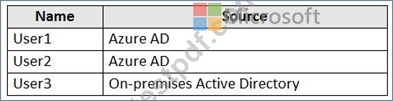
The tenant contains the groups shown in the following table.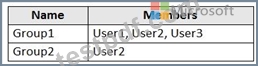
You configure a multi-factor authentication (MFA) registration policy that and the following settings:
* Assignments:
* Include: Group1
* Exclude Group2
Controls: Require Azure MFA registration
Enforce Policy: On
For each of the following statements, select Yes if the statement is true. Otherwise, select No.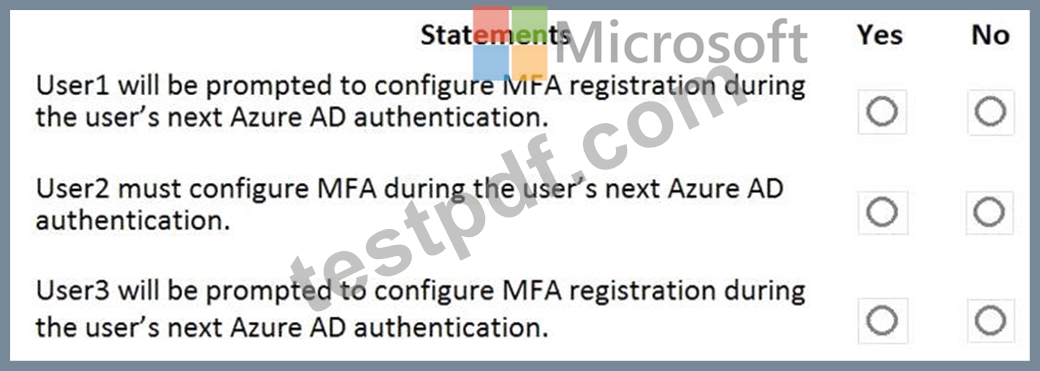
Answer:
Explanation: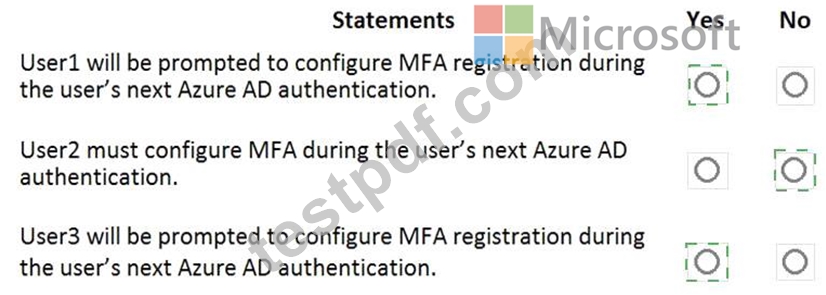
Explanation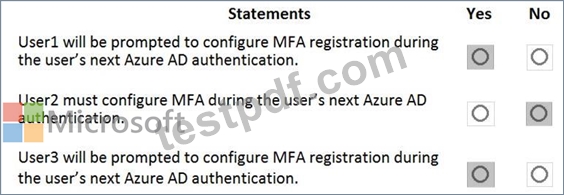
NEW QUESTION # 66
You work at a company named Contoso, Ltd. that has the offices shown in the following table.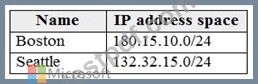
Contoso has an Azure Active Directory (Azure AD) tenant named contoso.com. All contoso.com users have Azure Multi-Factor Authentication (MFA) enabled. The tenant contains the users shown in the following table.
The multi-factor settings for contoso.com are configured as shown in the following exhibit.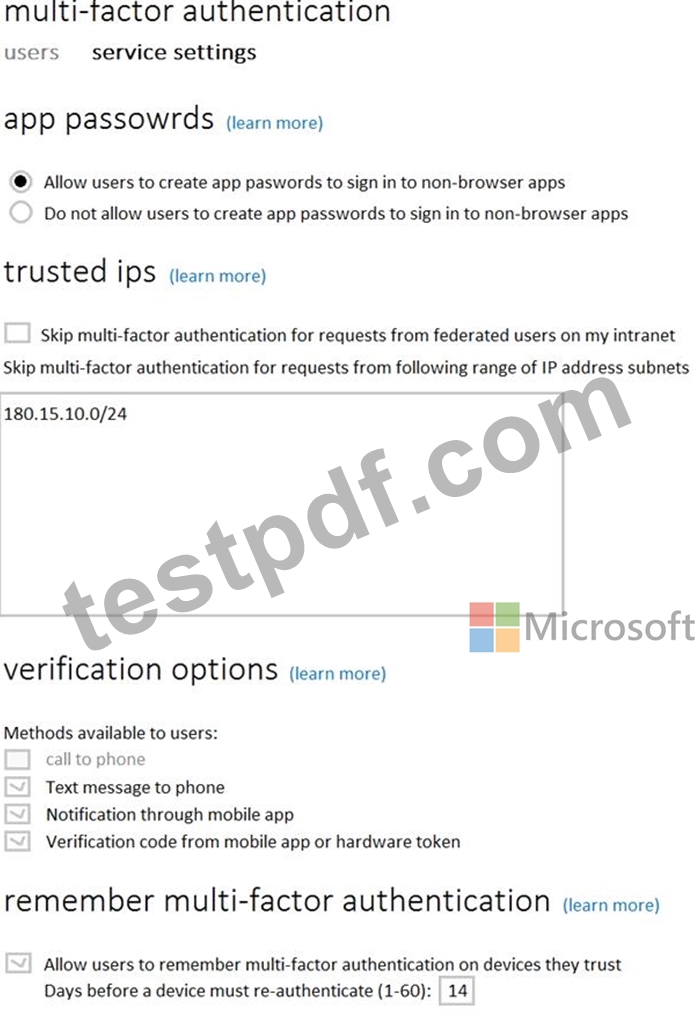
For each of the following statements, select Yes if the statement is true. Otherwise, select No.
NOTE: Each correct selection is worth one point.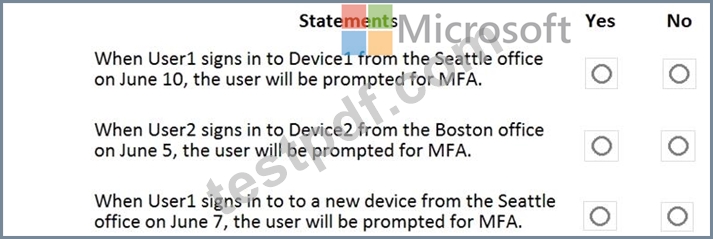
Answer:
Explanation: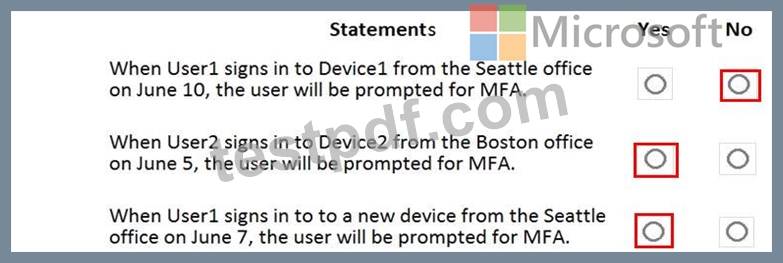
NEW QUESTION # 67
SIMULATION
Use the following login credentials as needed:
To enter your username, place your cursor in the Sign in box and click on the username below.
To enter your password, place your cursor in the Enter password box and click on the password below.
Azure Username: [email protected]
Azure Password: Ag1Bh9!#Bd
The following information is for technical support purposes only:
Lab Instance: 10598168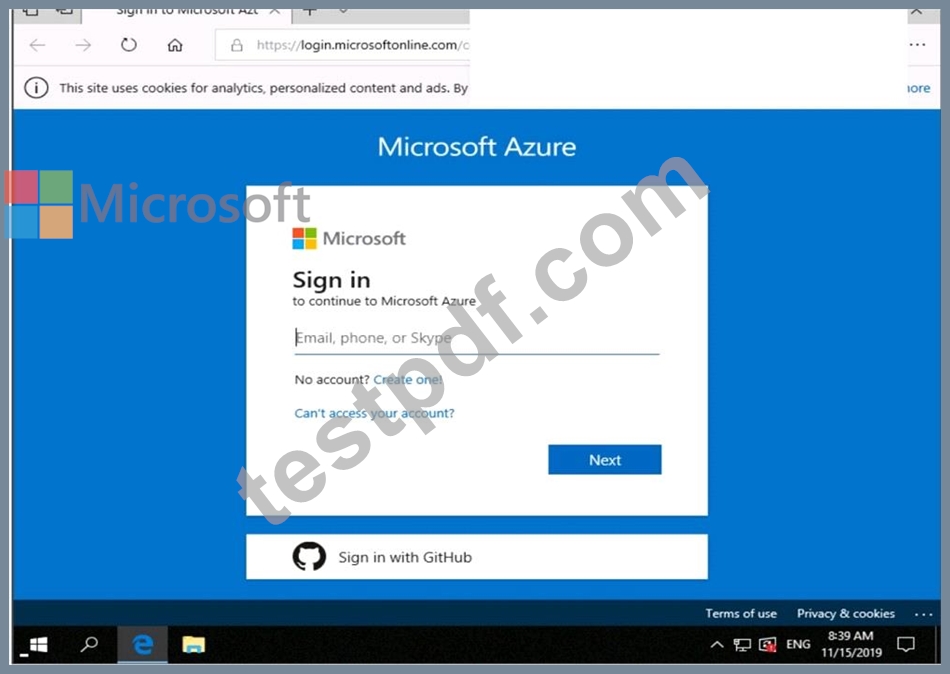
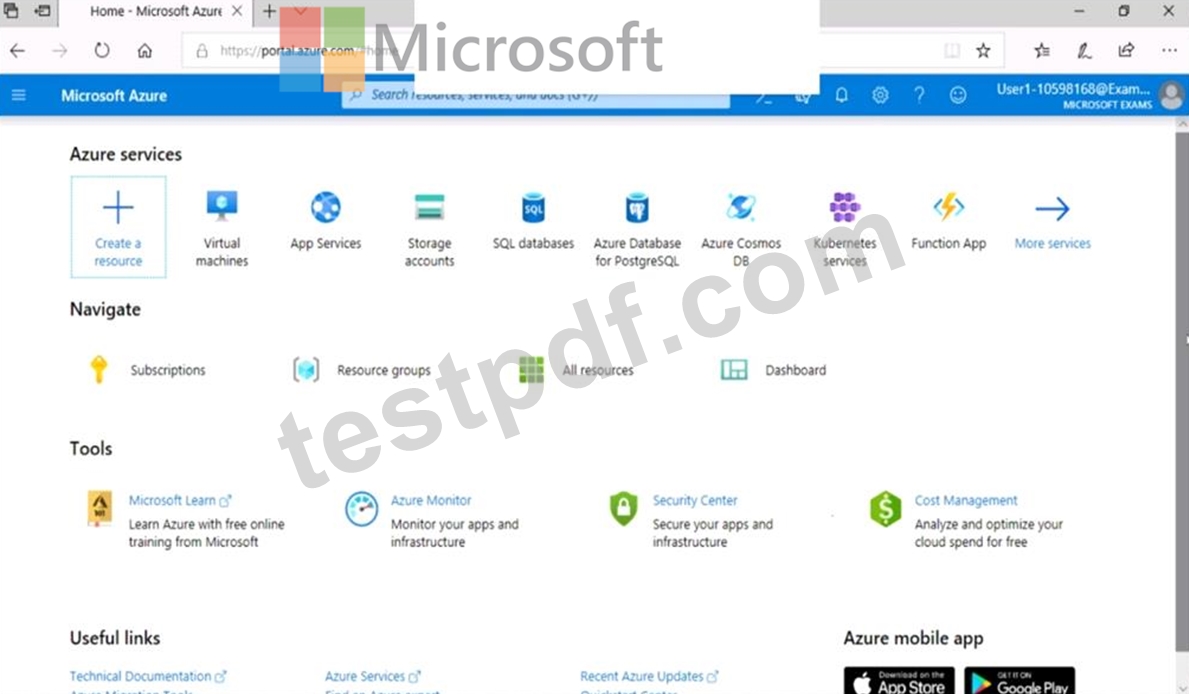
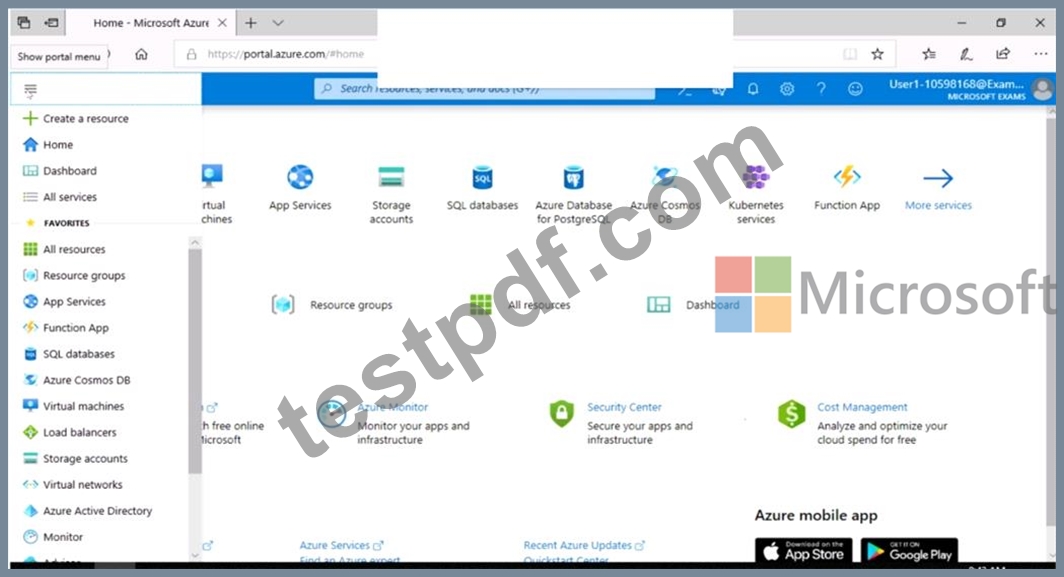
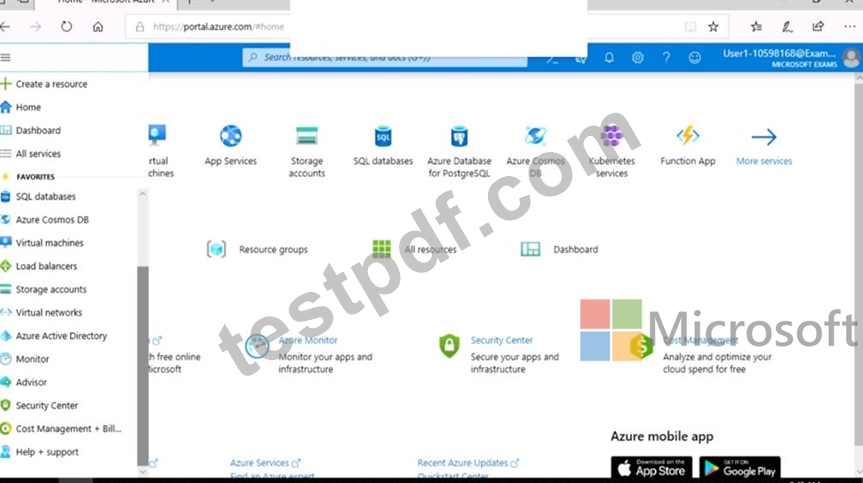
You need to create a new Azure Active Directory (Azure AD) directory named 10598168.onmicrosoft.com. The new directory must contain a user named [email protected] who is configured to sign in by using Azure Multi-Factor Authentication (MFA).
To complete this task, sign in to the Azure portal.
- A. Step 1: Create an Azure Active Directory tenant
1. Browse to the Azure portal and sign in with an account that has an Azure subscription.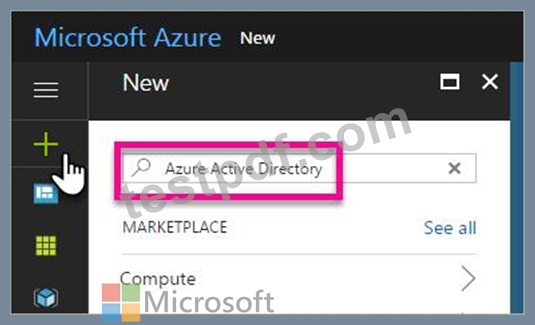
3. Select Azure Active Directory in the search results.
4. Select Create.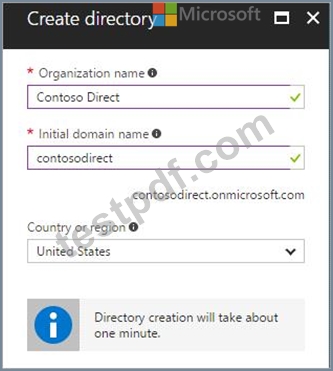
6. After directory creation is complete, select the information box to manage your new directory. Next, you're going to add tenant users.
Step 2: Create an Azure Active Directory tenant user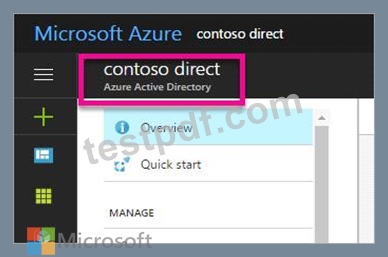
8. Under Manage, select Users.
9. Select All users and then select + New user.
10. Provide a Name and User name (user1) for the regular user tenant You can also show the temporary password. When you're done, select Create.
Name: user1
User name: [email protected]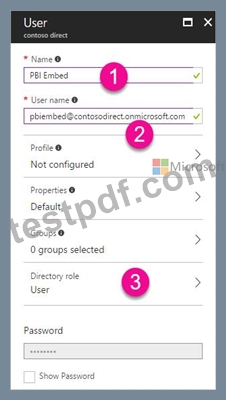
- B. Step 1: Create an Azure Active Directory tenant
1. Browse to the Azure portal and sign in with an account that has an Azure subscription.
3. Select Azure Active Directory in the search results.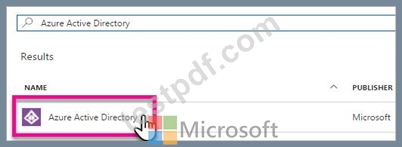
4. Select Create.
6. After directory creation is complete, select the information box to manage your new directory. Next, you're going to add tenant users.
Step 2: Create an Azure Active Directory tenant user
7. In the Azure portal, make sure you are on the Azure Active Directory fly out.
8. Under Manage, select Users.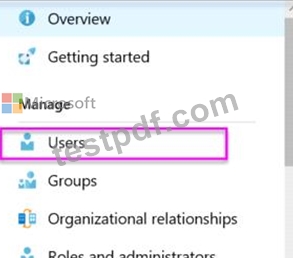
9. Select All users and then select + New user.
10. Provide a Name and User name (user1) for the regular user tenant You can also show the temporary password. When you're done, select Create.
Name: user1
User name: [email protected]
Answer: B
Explanation:
Reference:
https://docs.microsoft.com/en-us/power-bi/developer/create-an-azure-active-directory-tenant
NEW QUESTION # 68
You have an Azure subscription named Sub 1 that is associated to an Azure Active Directory (Azure AD) tenant named contoso.com. The tenant contains the users shown in the following table.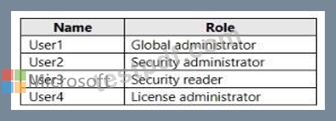
Each user is assigned an Azure AD Premium P2 license.
You plan lo onboard and configure Azure AD identity Protection.
Which users can onboard Azure AD Identity Protection, remediate users, and configure policies? To answer, select the appropriate options in the answer area.
NOTE: Each correct selection is worth one point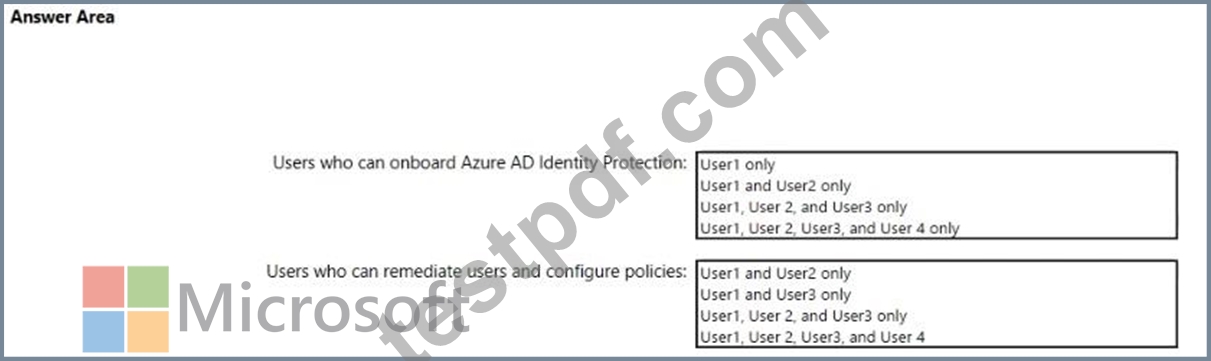
Answer:
Explanation:
Explanation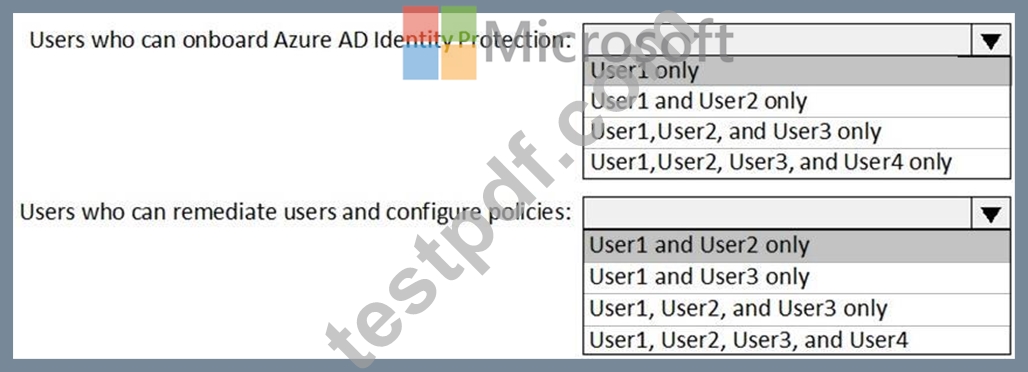
NEW QUESTION # 69
You have an Azure subscription that contains the resources shown in the following table.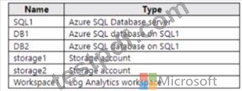
SQL1 has the following configurations:
* Auditing: Enabled
* Audit log destination: storage1, Workspace1
DB1 has the following configurations:
* Auditing: Enabled
* Audit log destination: storage2
DB2 has auditing disabled.
Where are the audit logs for DB1 and DB2 stored? To answer, select the appropriate options in the answer area NOTE: Each correct selection is worth one point.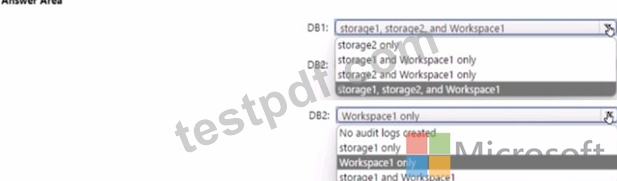
Answer:
Explanation: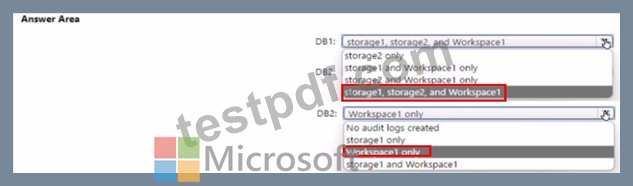
NEW QUESTION # 70
You are implementing conditional access policies.
You must evaluate the existing Azure Active Directory (Azure AD) risk events and risk levels to configure and implement the policies.
You need to identify the risk level of the following risk events:
Users with leaked credentials
Impossible travel to atypical locations
Sign ins from IP addresses with suspicious activity
Which level should you identify for each risk event? To answer, drag the appropriate levels to the correct risk events. Each level may be used once, more than once, or not at all. You may need to drag the split bar between panes or scroll to view content.
NOTE: Each correct selection is worth one point.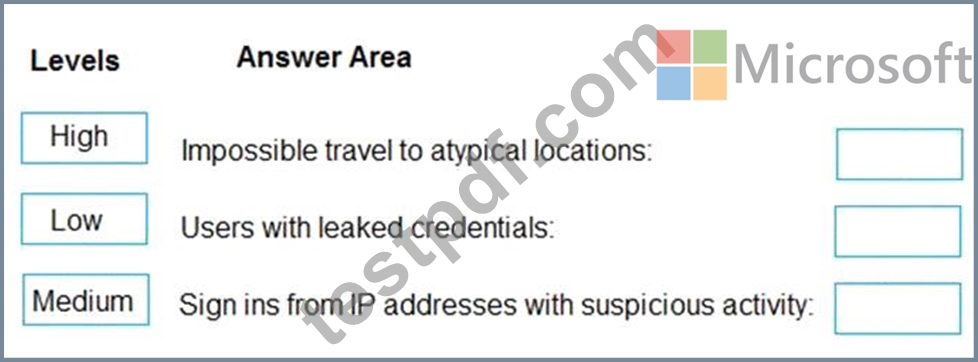
Answer:
Explanation: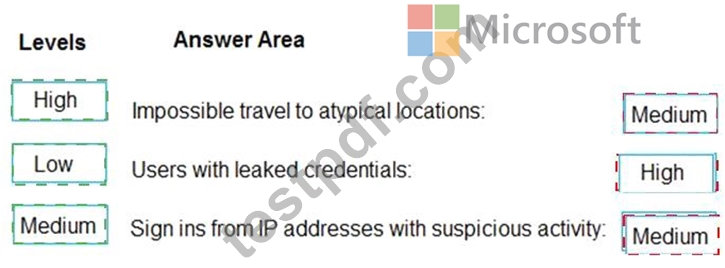
Explanation:
Medium
High
Medium
Refer
https://docs.microsoft.com/en-us/azure/active-directory/reports-monitoring/concept-risk-events#sign-ins-from-ip
NEW QUESTION # 71
Your network contains an Active Directory forest named contoso.com. The forest contains a single domain.
You have an Azure subscription named Sub1 that is associated to an Azure Active Directory (Azure AD) tenant named contoso.com.
You plan to deploy Azure AD Connect and to integrate Active Directory and the Azure AD tenant.
You need to recommend an integration solution that meets the following requirements:
* Ensures that password policies and user logon restrictions apply to user accounts that are synced to the tenant
* Minimizes the number of servers required for the solution.
Which authentication method should you include in the recommendation?
- A. pass-through authentication with seamless single sign-on (SSO)
- B. password hash synchronization with seamless single sign-on (SSO)
- C. federated identity with Active Directory Federation Services (AD FS)
Answer: B
Explanation:
Password hash synchronization requires the least effort regarding deployment, maintenance, and infrastructure. This level of effort typically applies to organizations that only need their users to sign in to Office
365, SaaS apps, and other Azure AD-based resources. When turned on, password hash synchronization is part of the Azure AD Connect sync process and runs every two minutes.
Incorrect Answers:
A: A federated authentication system relies on an external trusted system to authenticate users. Some companies want to reuse their existing federated system investment with their Azure AD hybrid identity solution. The maintenance and management of the federated system falls outside the control of Azure AD. It's up to the organization by using the federated system to make sure it's deployed securely and can handle the authentication load.
C: For pass-through authentication, you need one or more (we recommend three) lightweight agents installed on existing servers. These agents must have access to your on-premises Active Directory Domain Services, including your on-premises AD domain controllers. They need outbound access to the Internet and access to your domain controllers. For this reason, it's not supported to deploy the agents in a perimeter network.
Pass-through Authentication requires unconstrained network access to domain controllers. All network traffic is
https://www.fast2test.com/AZ-500-practice-test.html 12
Valid Fast2test AZ-500 Exam PDF Dumps - New AZ-500 Real Exam Questions
encrypted and limited to authentication requests.
References:
https://docs.microsoft.com/en-us/azure/active-directory/hybrid/how-to-connect-pta
NEW QUESTION # 72
You have a management group named MG1 that contains an Azure subscription and a resource group named RG1. RG1 contains a virtual machine named VM1. You have the custom Azure roles shown in the following table.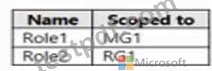
The permissions for Role1 are shown in the following role definition file.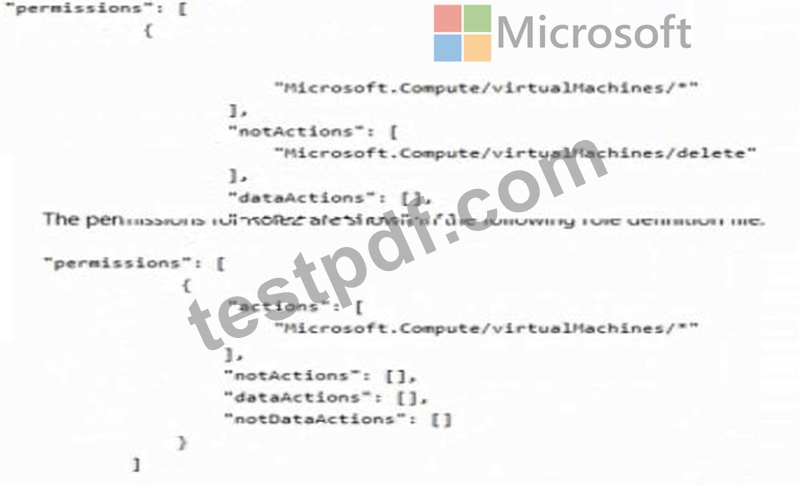
You assign the roles to the users shown in the following table.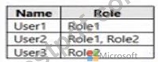
For each of the following statements, select Yes if the statement is true. Otherwise, select No NOTE: Each correct selection is worth one point.
Answer:
Explanation:
Explanation
NEW QUESTION # 73
You need to create an Azure key vault. The solution must ensure that any object deleted from the key vault be retained for 90 days.
How should you complete the command? To answer, select the appropriate options in the answer area.
NOTE: Each correct selection is worth one point.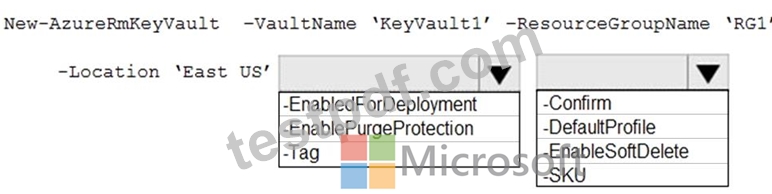
Answer:
Explanation: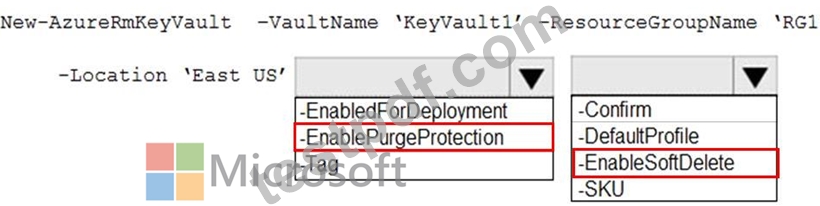
Reference:
https://docs.microsoft.com/en-us/powershell/module/azurerm.keyvault/new-azurermkeyvault
NEW QUESTION # 74
You have Azure virtual machines that have Update Management enabled. The virtual machines are configured as shown in the following table.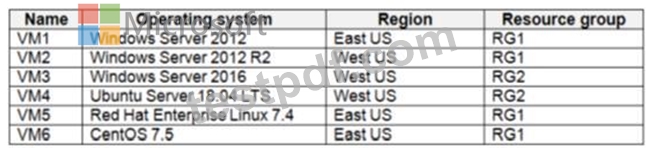
You schedule two update deployments named Update1 and Update2. Update1 updates VM3. Update2 updates VM6.
Which additional virtual machines can be updated by using Update1 and Update2? To answer, select the appropriate options in the answer area.
NOTE: Each correct selection is worth one point.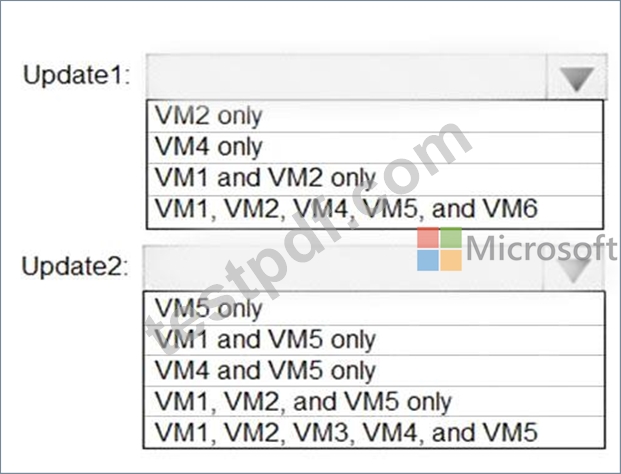
Answer:
Explanation: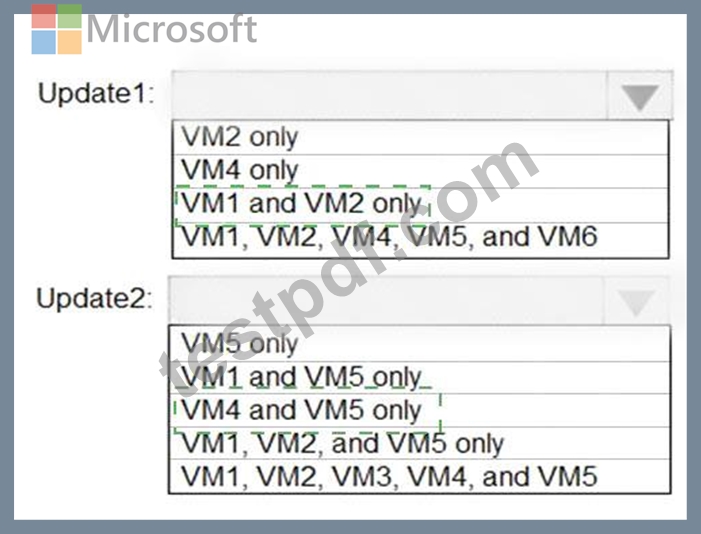
Explanation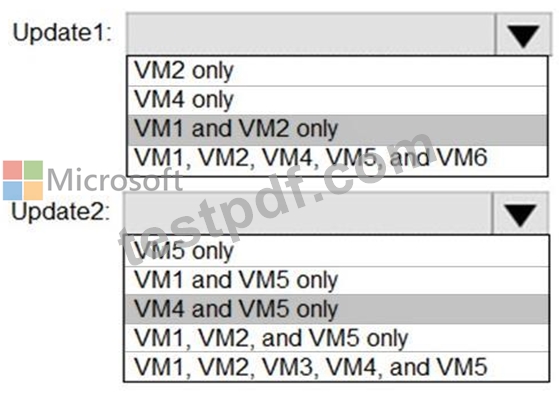
Update1: VM1 and VM2 only
VM3: Windows Server 2016 West US RG2
Update2: VM4 and VM5 only
VM6: CentOS 7.5 East US RG1
For Linux, the machine must have access to an update repository. The update repository can be private or public.
References:
https://docs.microsoft.com/en-us/azure/automation/automation-update-management
NEW QUESTION # 75
You have an Azure subscription that contains the custom roles shown in the following table.
In the Azure portal, you plan to create new custom roles by cloning existing roles. The new roles will be configured as shown in the following table.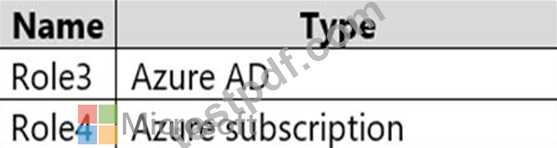
Which roles can you clone to create each new role? To answer, select the appropriate options in the answer area.
NOTE: Each correct selection is worth one point.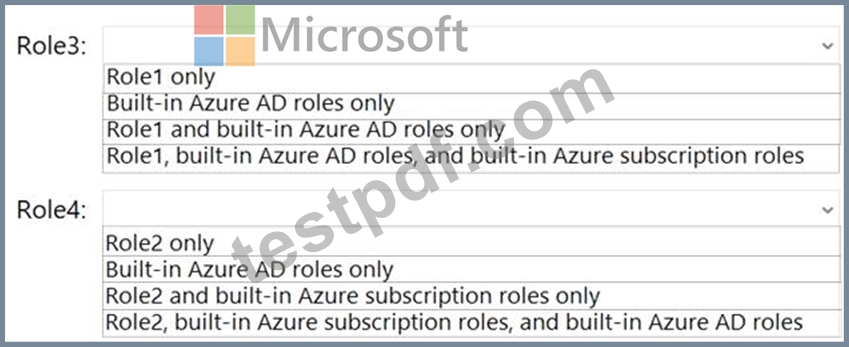
Answer:
Explanation: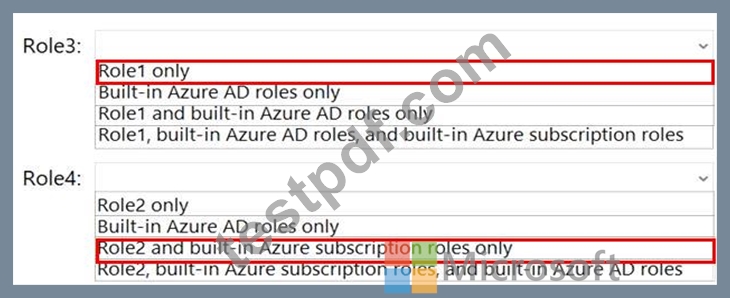
Reference:
https://docs.microsoft.com/en-us/azure/active-directory/roles/custom-create
https://docs.microsoft.com/en-us/azure/role-based-access-control/custom-roles-portal
NEW QUESTION # 76
You assign User8 the Owner role for RG4, RG5, and RG6.
In which resource groups can User8 create virtual networks and NSGs? To answer, select the appropriate options in the answer area.
NOTE: Each correct selection is worth one point.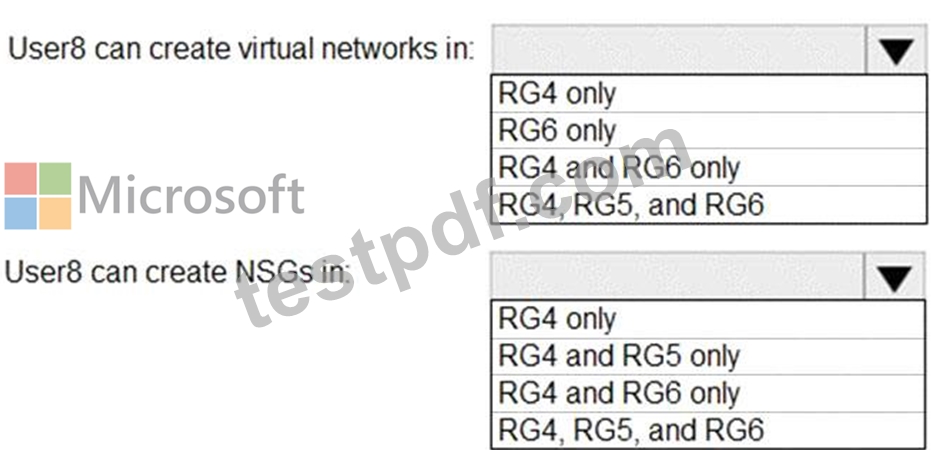
Answer:
Explanation: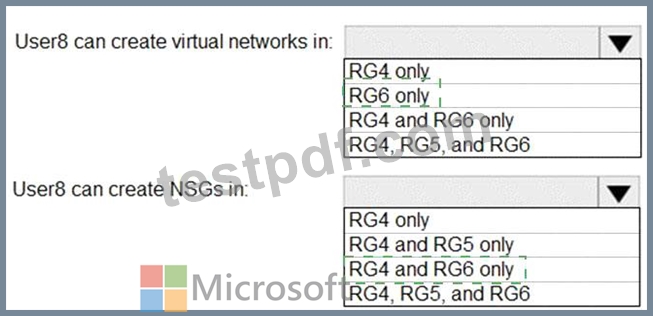
Explanation
Box1: RG6 only as there is not option for RG5 & RG6 which it should be.
Box2: RG4 & RG6
NEW QUESTION # 77
You have an Azure subscription named Sub 1 that is associated to an Azure Active Directory (Azure AD) tenant named contoso.com. The tenant contains the users shown in the following table.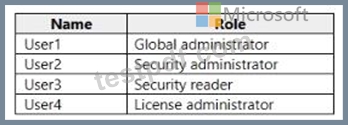
Each user is assigned an Azure AD Premium P2 license.
You plan lo onboard and configure Azure AD identity Protection.
Which users can onboard Azure AD Identity Protection, remediate users, and configure policies? To answer, select the appropriate options in the answer area.
NOTE: Each correct selection is worth one point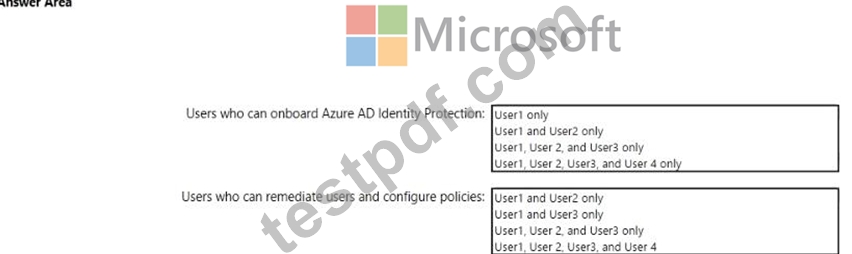
Answer:
Explanation: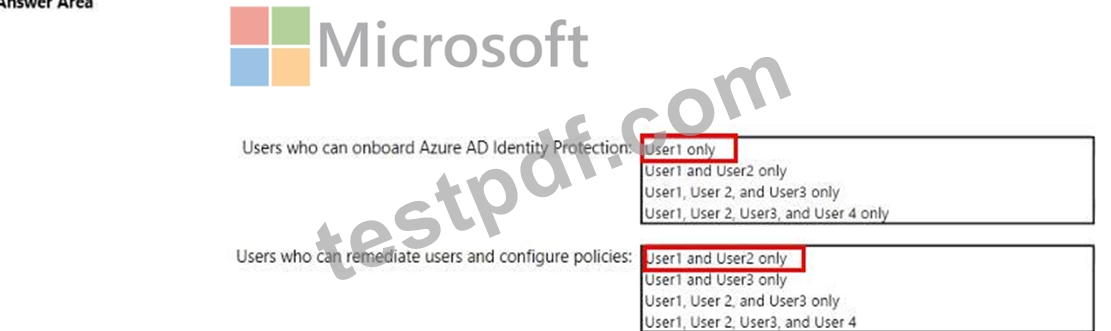
NEW QUESTION # 78
You create an Azure subscription.
You need to ensure that you can use Azure Active Directory (Azure AD) Privileged Identity Management (PIM) to secure Azure AD roles.
Which three actions should you perform in sequence? To answer, move the appropriate actions from the list of actions to the answer area and arrange them in the correct order.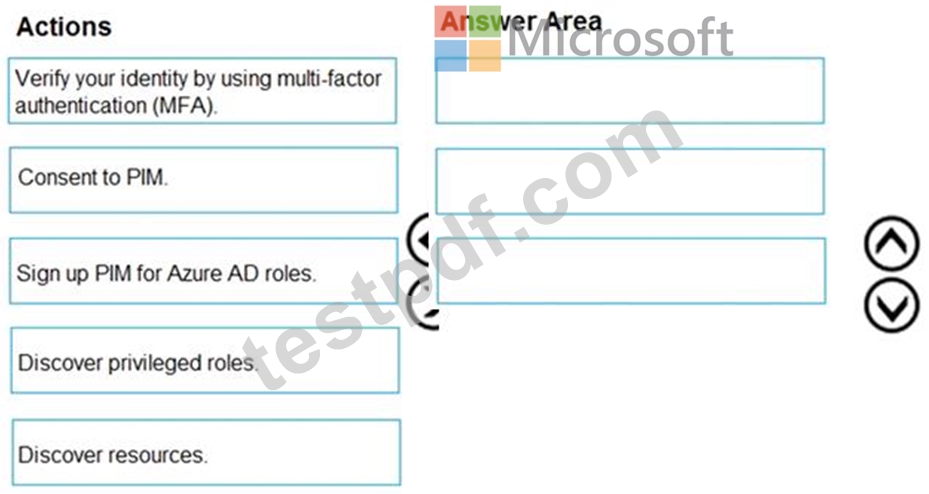
Answer:
Explanation: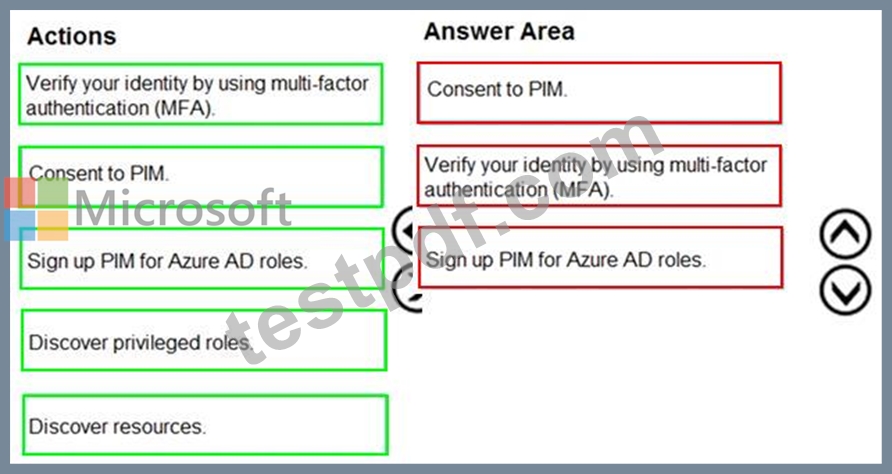
Explanation:
Step 1: Consent to PIM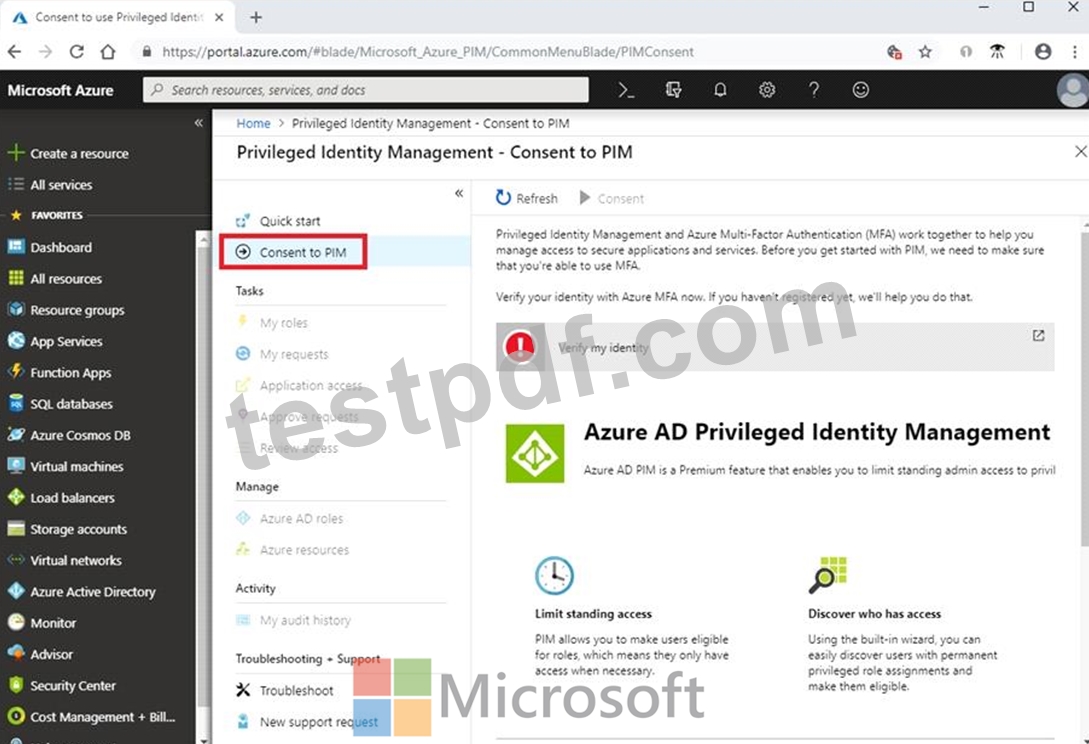
Step: 2 Verify your identity by using multi-factor authentication (MFA) Click Verify my identity to verify your identity with Azure MFA. You'll be asked to pick an account.
Step 3: Sign up PIM for Azure AD roles
Once you have enabled PIM for your directory, you'll need to sign up PIM to manage Azure AD roles.
References:
https://docs.microsoft.com/en-us/azure/active-directory/privileged-identity-management/pim-getting-started
NEW QUESTION # 79
You plan to use Azure Disk Encryption for several virtual machine disks.
You need to ensure that Azure Disk Encryption can retrieve secrets from the KeyVault11641655 Azure key vault.
To complete this task, sign in to the Azure portal and modify the Azure resources.
Answer:
Explanation:
See the explanation below.
Explanation
1. In the Azure portal, type Key Vaults in the search box, select Key Vaults from the search results then select KeyVault11641655. Alternatively, browse to Key Vaults in the left navigation pane.
2. In the Key Vault properties, scroll down to the Settings section and select Access Policies.
3. Select the Azure Disk Encryption for volume encryption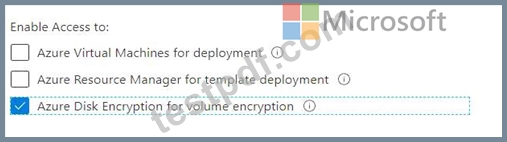
4. Click Save to save the changes.
NEW QUESTION # 80
You have a network security group (NSG) bound to an Azure subnet.
You run Get-AzureRmNetworkSecurityRuleConfig and receive the output shown in the following exhibit.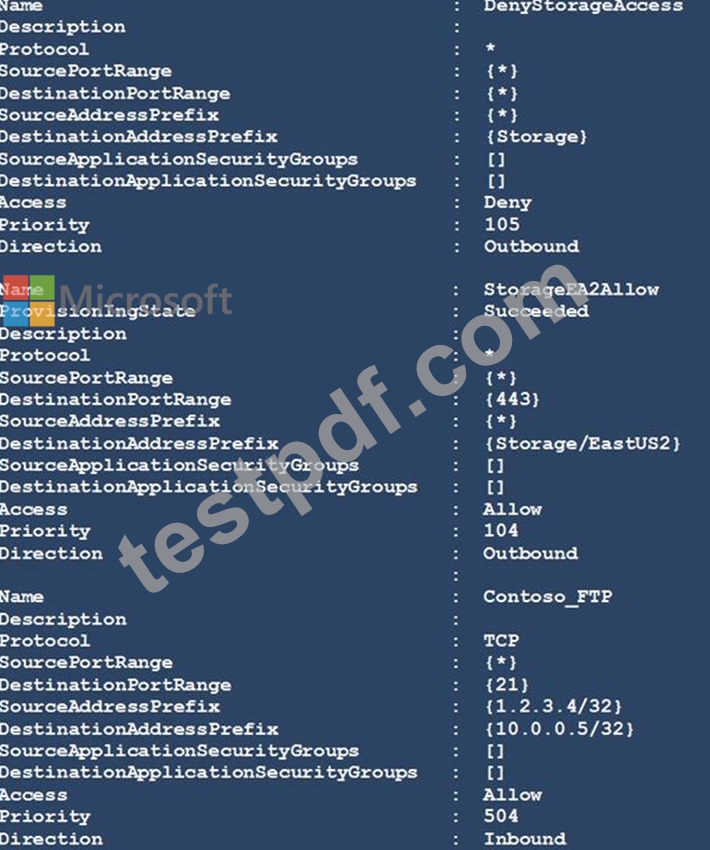
Use the drop-down menus to select the answer choice that completes each statement based on the information presented in the graphic.
NOTE: Each correct selection is worth one point.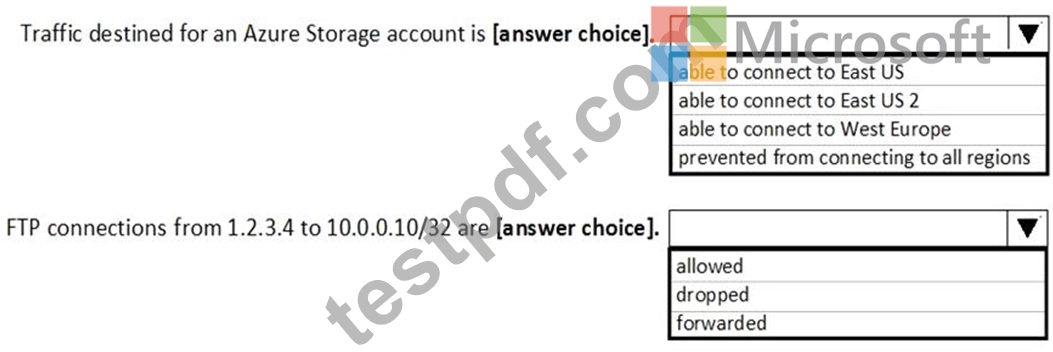
Answer:
Explanation: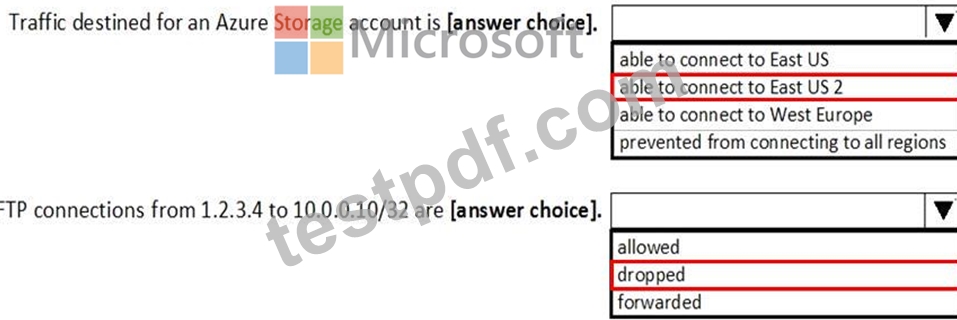
Reference:
https://docs.microsoft.com/en-us/azure/virtual-network/manage-network-security-group
NEW QUESTION # 81
You have an Azure subscription.
You plan to implement Azure DDoS Protection. The solution must meet the following requirement:
* Provide access to DDoS rapid response support during active attacks.
* Project Basic SKU public IP addresses.
You need to recommend which type of DDoS projection to use for each requirement.
What should you recommend? To answer, drag the appropriate DDoS projection types to the correct requirements. Each DDoS Projection type may be used once, or not at all. You may need to drag the split bar between panes or scroll to view connect.
NOTE: Each correct selection is worth one point.
Answer:
Explanation:
Explanation
NEW QUESTION # 82
You have an Azure key vault named KeyVault1 that contains the items shown in the following table.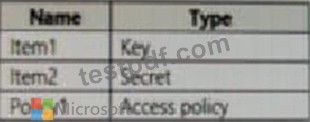
In KeyVault, the following events occur in sequence:
* Item is deleted
* An administrator enables soft delete.
* Item2 and Policy1 are deleted.
For each of the following statements, select Yes if the statement is true. Otherwise, select No.
NOTE: Each correct selection is worth one point.
Answer:
Explanation:
NEW QUESTION # 83
......
AZ-500 Dumps To Pass Microsoft Azure Security Engineer Associate Exam in One Day: https://pass4sure.testpdf.com/AZ-500-practice-test.html
