We offer free update service for one year
Every time, before our customer buying our Databricks Certified Data Engineer Professional pass4sure practice, they always ask whether it is the latest or not, and care about the latest update time. It is very normal. We can understand this case. First, we guarantee the Databricks Certified Data Engineer Professional test dumps you get are the latest and valid which can ensure you pass with ease. Second, we offer free update service for one year after you purchase Databricks Certification sure pass pdf, so you do not worry the dump is updated after you buy. If there is any update about Certified-Data-Engineer-Professional Databricks Certified Data Engineer Professional test practice material, our system will send it to your payment email automatically. Besides, if you care about the update information, you can pay attention to the version No. on our product page. If the version No. is increased, the Databricks Certified Data Engineer Professional pdf dump is updated. If you do not receive any email when you find our dumps are updated, please contact us by email, we will solve your problem as soon as possible.
Besides, we have the full refund policy, if you do not pass the Databricks Databricks Certified Data Engineer Professional actual test, we promise to give you full refund. You just need to show us your failure Databricks Certified Data Engineer Professional certification. After confirmation, we will refund you. The refund money will enter into your accounts in about 15 days, so please wait with patience.
Instant Download Certified-Data-Engineer-Professional Braindumps: Our system will send you the TestPDF Certified-Data-Engineer-Professional braindumps file you purchase in mailbox in a minute after payment. (If not received within 12 hours, please contact us. Note: don't forget to check your spam.)
Printable Exams-in PDF format
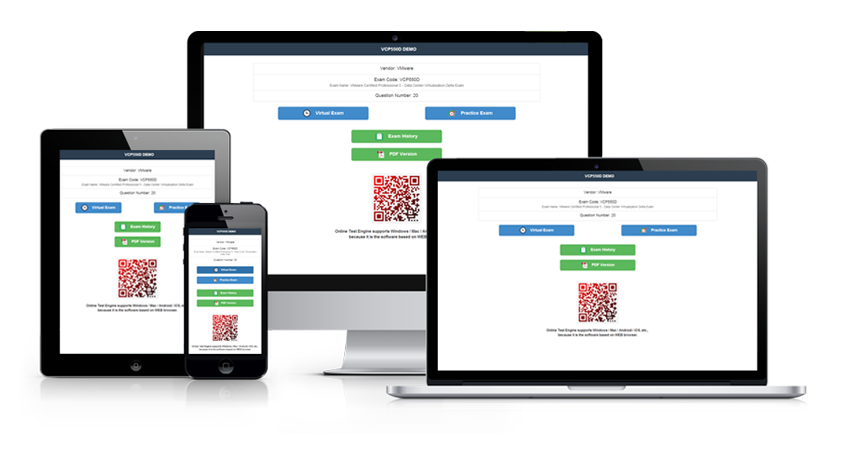
The pdf format is the common version of our Databricks Certified Data Engineer Professional pdf training material.The content is the same as other two versions. Besides, the cost of Certified-Data-Engineer-Professional pdf test torrent is very reasonable and affordable. Databricks Certified Data Engineer Professional sure pass pdf can be printed into paper, which is very convenient for you to review and do marks. If you are tired of the digital screen study and want to study with your pens, Databricks Certified Data Engineer Professional pdf version is suitable for you. The Databricks Certification Certified-Data-Engineer-Professional pdf paper study material is very convenient to carry. You can make full use of your spare time to prepare the Databricks Certified Data Engineer Professional actual test. When you are at the cafe, you can read and scan your papers and study two questions. I think this way to study is acceptable by many people. In addition, when you want to do some marks during your Databricks Certified Data Engineer Professional test study, you just need a pen, you can write down what you thought. With the obvious marks, you will soon get your information in the next review. Then repeated memory about Certified-Data-Engineer-Professional pass4sure study guide will bring a good score in the Databricks Certified Data Engineer Professional actual test.
As we all know, Databricks Certified Data Engineer Professional certification increasingly becomes a validation of an individual's skills. Now, the market has a great demand for the people qualified with Databricks Certified Data Engineer Professional certification. In recent years, the Databricks Databricks Certification certification has become a global standard for many successfully IT companies. So, in order to get a better job chance, many people choose to attend the Databricks Certified Data Engineer Professional exam test and get the certification. Now, there are many people preparing for the Certified-Data-Engineer-Professional test, and most of them meet with difficulties. How to prepare it with high efficiency is quite important. While, your problem will be solved by the Databricks Certified Data Engineer Professional test practice material which can ensure you 100% pass.

Databricks Certified-Data-Engineer-Professional Exam Syllabus Topics:
| Section | Objectives |
|---|
| Data Transformation, Cleansing, and Quality | - Advanced Data Transformation
- 1. Apply window functions, joins, and aggregations to large datasets
- 2. Write efficient Spark SQL and PySpark transformations
- Data Quality
- 1. Develop data quarantining processes for invalid data
- 2. Apply data quality controls using Lakeflow Spark Declarative Pipelines or Auto Loader
|
| Data Ingestion & Acquisition | - Design and implement data ingestion pipelines
- 1. Ingest Delta Lake, Parquet, ORC, Avro, JSON, CSV, XML, Text, and Binary data
- 2. Ingest data from message buses and cloud storage
- 3. Build append-only pipelines for batch and streaming data using Delta
|
| Data Modelling | - Dimensional Modelling
- 1. Design dimensional models for analytical workloads
- Scalable Data Models
- 1. Optimize data layout using Liquid Clustering
- 2. Design and implement scalable data models using Delta Lake
- 3. Understand Liquid Clustering versus partitioning and Z-Ordering
|
| Cost & Performance Optimisation | - Cost Optimization
- 1. Understand how Unity Catalog managed tables reduce operational overhead
- Query Performance
- 1. Use Query Profile to identify performance bottlenecks
- 2. Identify inefficient joins and excessive data shuffling
- Delta Optimization
- 1. Use Change Data Feed to address streaming table limitations and improve latency
- 2. Understand deletion vectors and liquid clustering
- 3. Apply data skipping and file pruning techniques
|
| Ensuring Data Security and Compliance | - Data Security
- 1. Use row filters and column masks for sensitive data
- 2. Use ACLs to secure workspace objects and enforce least privilege
- 3. Apply anonymization and pseudonymization techniques
- Compliance
- 1. Develop data purging solutions according to data retention policies
- 2. Implement pipelines that detect and mask personally identifiable information
|
| Developing Code for Data Processing using Python and SQL | - Using Python and Tools for Development
- 1. Develop User-Defined Functions using Pandas/Python UDFs
- 2. Manage and troubleshoot third-party library installations and dependencies
- 3. Design and implement scalable Python project structures optimized for Databricks Asset Bundles
- Building and Testing ETL Pipelines
- 1. Configure environments, dependencies, memory, and retry behavior
- 2. Create and automate ETL workloads using Jobs through UI, APIs, and CLI
- 3. Use APPLY CHANGES APIs for change data capture
- 4. Compare streaming tables and materialized views
- 5. Compare Spark Structured Streaming and Lakeflow Spark Declarative Pipelines
- 6. Develop unit and integration tests for data processing code
- 7. Build production-ready batch and streaming pipelines using Lakeflow Spark Declarative Pipelines and Auto Loader
- 8. Use control flow operators in pipeline components
|
| Monitoring and Alerting | - Alerting
- 1. Configure Lakeflow Jobs notifications for job status and performance issues
- 2. Use SQL Alerts for data quality monitoring
- Monitoring
- 1. Use Query Profiler and Spark UI to monitor workloads
- 2. Use Databricks REST APIs and CLI for monitoring jobs and pipelines
- 3. Use system tables for resource, cost, audit, and workload monitoring
- 4. Use Lakeflow Spark Declarative Pipelines event logs for monitoring
|
| Data Governance | - Metadata and Discoverability
- 1. Create and maintain descriptions and metadata for enterprise data
- Unity Catalog Permissions
- 1. Understand the Unity Catalog permission inheritance model
|
| Data Sharing and Federation | - Lakehouse Federation
- 1. Configure Lakehouse Federation with appropriate governance
- Delta Sharing
- 1. Configure Databricks-to-Databricks Sharing
- 2. Configure sharing with external platforms using the open sharing protocol
- 3. Share live Lakehouse data with external computing platforms
|
| Debugging and Deploying | - Debugging and Troubleshooting
- 1. Use Spark UI, cluster logs, system tables, and query profiles for diagnostics
- 2. Use Lakeflow Spark Declarative Pipelines event logs and Spark UI for debugging
- 3. Analyze errors and remediate failed job runs
- Deploying CI/CD
- 1. Build and deploy Databricks resources using Databricks Asset Bundles
- 2. Integrate Git-based CI/CD workflows using Databricks Git Folders
|
Databricks Certified Data Engineer Professional Sample Questions:
Question 1
A data engineer is tasked with ensuring that a Delta table in Databricks continuously retains deleted files for 15 days (instead of the default 7 days), in order to permanently comply with the organization's data retention policy. Which code snippet correctly sets this retention period for deleted files?
A. spark.sql("VACUUM my_table RETAIN 15 HOURS")
B. spark.sql("ALTER TABLE my_table SET TBLPROPERTIES
('delta.deletedFileRetentionDuration' = 'interval 15 days')")
C. from delta.tables import *
deltaTable = DeltaTable.forPath(spark, "/mnt/data/my_table")
deltaTable.deletedFileRetentionDuration = "interval 15 days"
D. spark.conf.set("spark.databricks.delta.deletedFileRetentionDuration", "15 days")
Question 2
A small company based in the United States has recently contracted a consulting firm in India to implement several new data engineering pipelines to power artificial intelligence applications. All the company's data is stored in regional cloud storage in the United States.
The workspace administrator at the company is uncertain about where the Databricks workspace used by the contractors should be deployed.
Assuming that all data governance considerations are accounted for, which statement accurately informs this decision?
A. Databricks leverages user workstations as the driver during interactive development; as such, users should always use a workspace deployed in a region they are physically near.
B. Cross-region reads and writes can incur significant costs and latency; whenever possible, compute should be deployed in the same region the data is stored.
C. Databricks workspaces do not rely on any regional infrastructure; as such, the decision should be made based upon what is most convenient for the workspace administrator.
D. Databricks runs HDFS on cloud volume storage; as such, cloud virtual machines must be deployed in the region where the data is stored.
E. Databricks notebooks send all executable code from the user's browser to virtual machines over the open internet; whenever possible, choosing a workspace region near the end users is the most secure.
Question 3
A data engineering team needs to implement a tagging system for their tables as part of an automated ETL process, and needs to apply tags programmatically to tables in Unity Catalog.
Which SQL command adds tags to a table programmatically?
A. ALTER TABLE table_name SET TAGS ('key1' = 'value1', 'key2' = 'value2');
B. APPLY TAGS ON table_name VALUES ('key1' = 'value1', 'key2' = 'value2');
C. COMMENT ON TABLE table_name TAGS ('key1' = 'value1', 'key2' = 'value2');
D. SET TAGS FOR table_name AS ('key1' = 'value1', 'key2' = 'value2');
Question 4
A data engineer is designing a system leveraging Lakeflow Declarative Pipeline technology to process real-time truck telemetry data ingested from JSON files in S3 using Auto Loader. The data includes truck_id, timestamp, location, speed, and fuel_level. The system must support two use cases:
- Near-real-time monitoring of the latest location, speed, and
fuel_level per truck_id for the operations team.
- Daily aggregated reports of total distance traveled and average fuel
efficiency per truck_id for the management team.
Which approach should the data engineer use for streaming tables and materialized views in the Lakeflow Declarative Pipeline to meet these requirements?
A. Define a streaming table to ingest and store the raw telemetry data, and create a materialized view to compute the latest location, speed, and fuel_level per truck_id for real-time monitoring.
Create another materialized view to compute the daily aggregated distance and fuel efficiency per truck_id for reporting.
B. Define a streaming table to ingest and store the raw telemetry data, and create a streaming table to compute the daily aggregated distance and fuel efficiency per truck_id reporting. Create a materialized view to compute the latest location, speed, and fuel_level per truck_id for real-time monitoring.
C. Define a streaming table to ingest and store the raw telemetry data, and create a streaming table to incrementally compute the latest location, speed, and fuel_level per truck_id for real-time monitoring. Create a materialized view to compute the daily aggregated distance and fuel efficiency per truck_id for reporting.
D. Define a materialized view to ingest and store the raw telemetry data, and create a streaming table to compute the latest location, speed, and fuel_level per truck_id for real-time monitoring.
Create another materialized view to compute the daily aggregated distance and fuel efficiency per truck_id for reporting.
Question 5
A data architect has heard about lake's built-in versioning and time travel capabilities. For auditing purposes they have a requirement to maintain a full of all valid street addresses as they appear in the customers table.
The architect is interested in implementing a Type 1 table, overwriting existing records with new values and relying on Delta Lake time travel to support long-term auditing. A data engineer on the project feels that a Type 2 table will provide better performance and scalability. Which piece of information is critical to this decision?
A. Data corruption can occur if a query fails in a partially completed state because Type 2 tables requires setting multiple fields in a single update.
B. Delta Lake only supports Type 0 tables; once records are inserted to a Delta Lake table, they cannot be modified.
C. Shallow clones can be combined with Type 1 tables to accelerate historic queries for long-term versioning.
D. Delta Lake time travel does not scale well in cost or latency to provide a long-term versioning solution.
E. Delta Lake time travel cannot be used to query previous versions of these tables because Type 1 changes modify data files in place.
Solutions:
Question 1
Answer: B | Question 2
Answer: B | Question 3
Answer: A | Question 4
Answer: C | Question 5
Answer: D |


 PDF Version Demo